

World Fish Migration Day: From Ocean Depth to River Currents
This Saturday marks World Fish Migration Day 2026 – a global day to shine a light on the migratory species quietly disappearing from our rivers.
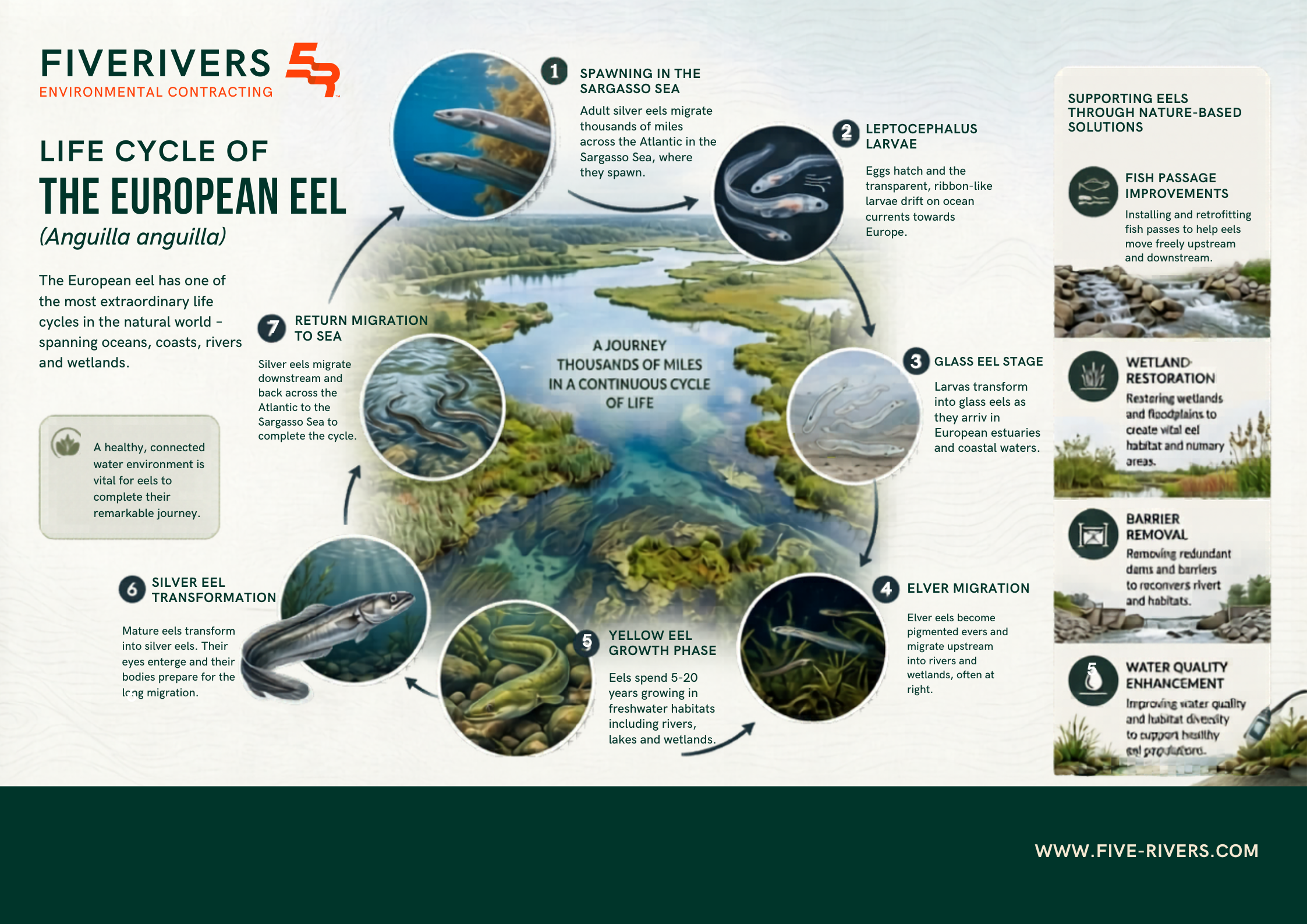
The European eel (Anguilla anguilla) is one of the most extraordinary creatures on our planet. Born in the Sargasso Sea, it drifts for up to three years across the Atlantic as a tiny leaf-shaped larva. It arrives at our shores as a glass eel – almost transparent, barely a few centimeters long, before spending decades maturing in our rivers, lakes and wetlands. When the time finally comes to reproduce, it makes the 4,000-mile return journey to spawn in the same patch of ocean. Once.
Every stage of that lifecycle depends on connected, clean, functioning habitat. And at almost every stage, it’s getting harder.
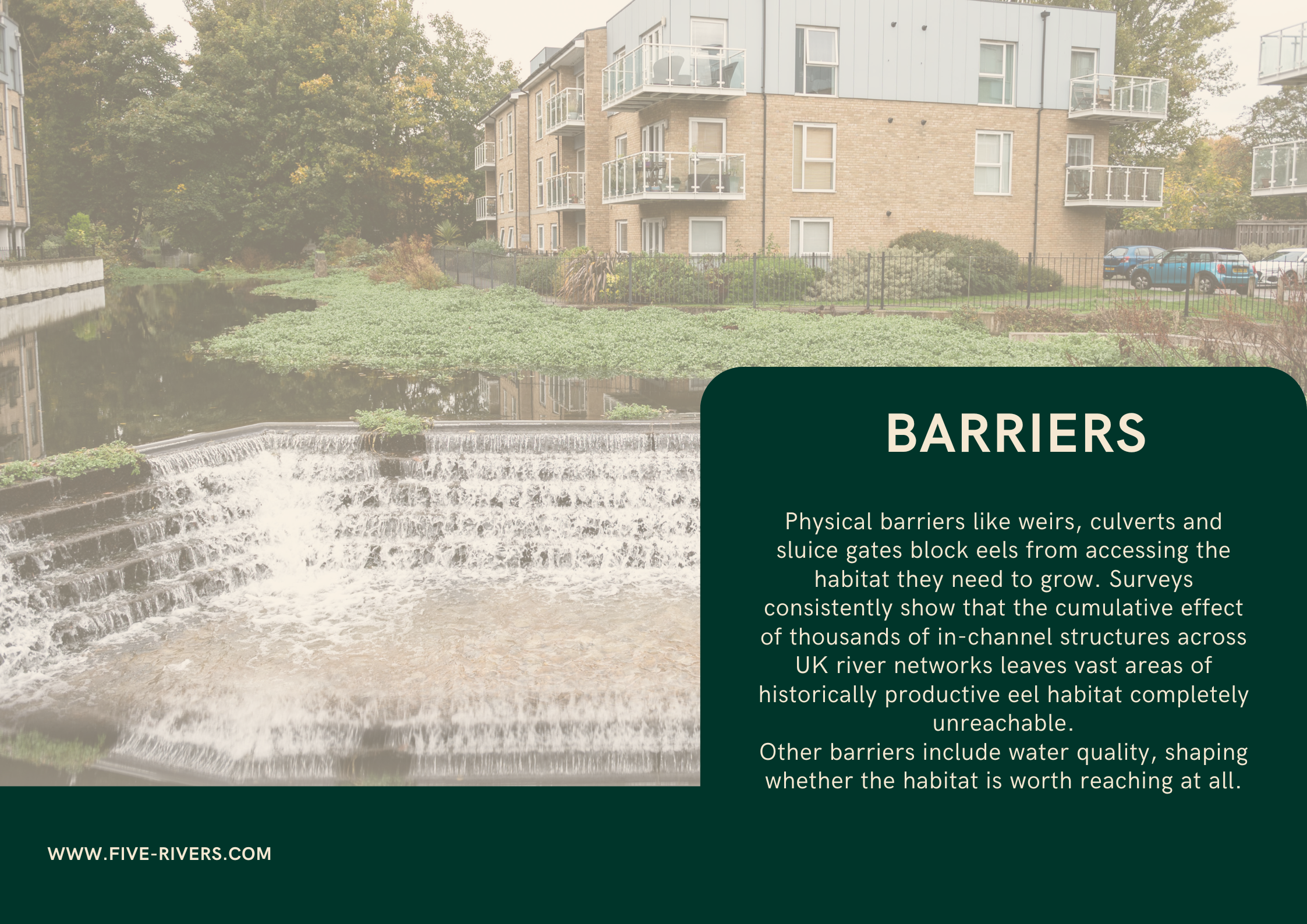
𝗕𝗮𝗿𝗿𝗶𝗲𝗿𝘀: weirs, culverts, sluice gates physically block eels from accessing the habitat they need to grow. Surveys consistently show that the cumulative effect of thousands of in-channel structures across UK river networks leaves vast areas of historically productive eel habitat completely unreachable.
𝗪𝗮𝘁𝗲𝗿 𝗾𝘂𝗮𝗹𝗶𝘁𝘆: shapes whether that habitat is worth reaching at all. Elevated nutrients, fine sediment, agricultural runoff and poor ecological condition degrade the invertebrate communities’ eels depend on for food, and compromise the conditions they need to thrive.
𝗪𝗲𝘁𝗹𝗮𝗻𝗱𝘀: are critical refugia, particularly for juvenile eels seeking sheltered, productive habitat with lower predation pressure. The loss of over 70% of natural wetland areas over the past century has quietly removed some of the most important stepping-stone habitats in the eel’s freshwater range.
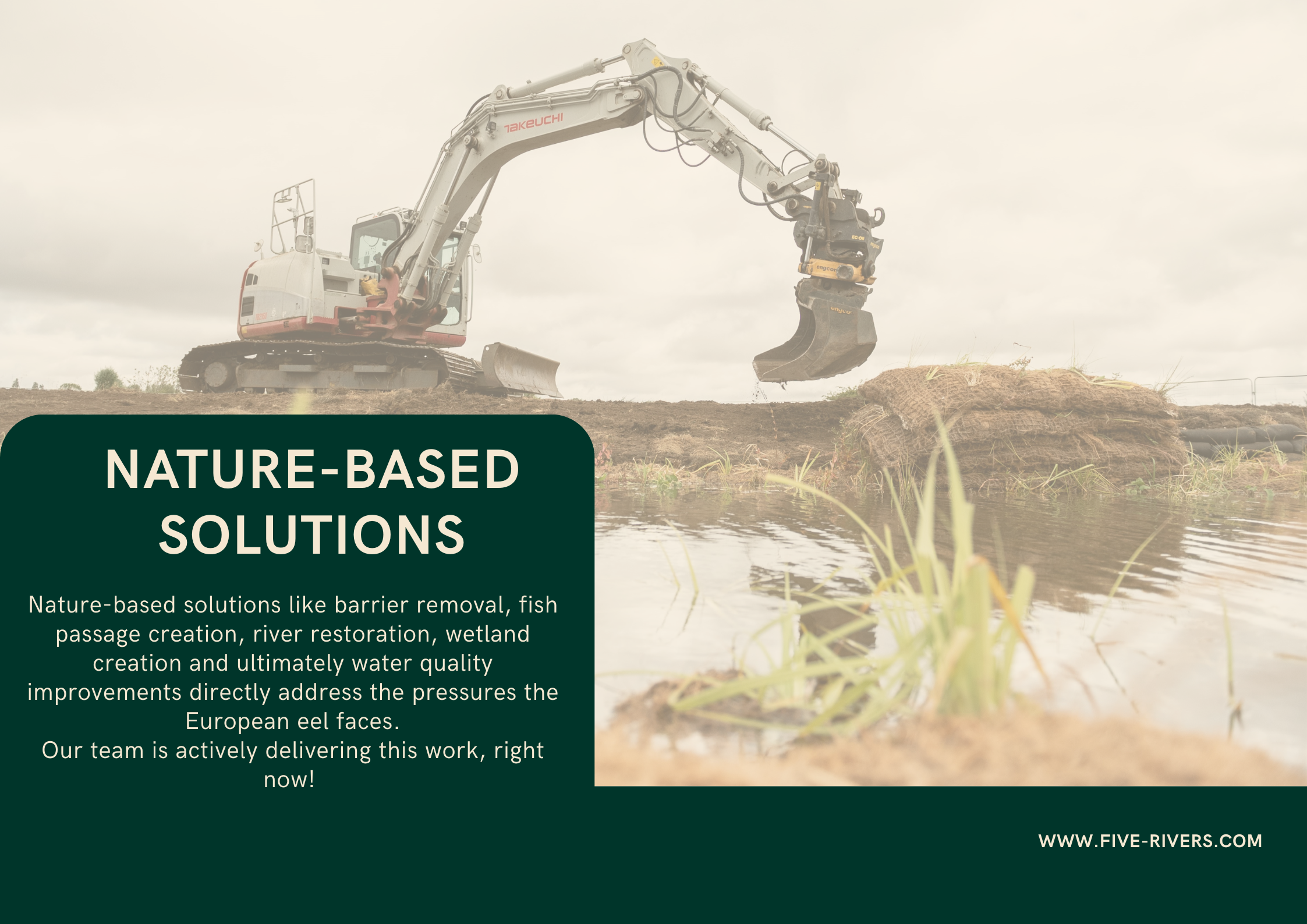
𝗧𝗵𝗲 𝗴𝗼𝗼𝗱 𝗻𝗲𝘄𝘀? These are solvable problems. Nature-based solutions like barrier removal, fish passage creation, river restoration, wetland creation and ultimately water quality improvements directly address the pressures the European eel faces.
At FiveRivers our teams are actively delivering this work in the UK:
🚧 Assessing barriers to migration to understand if they are impairing passage to fish and eels and importantly, formulating and implementing solutions.
🐟 Removing adult eels from landlocked water bodies to enable them to complete their life cycle.
💧We’ve created many pond and wetland habitat, at Hogsmill Local Nature Reserve we created the 2,000m2 Chamber Mead Wetlands improving water quality.
🏗️ We recently delivered two large-scale fish passage improvement schemes for Thames Water last year on the River Wandle (barrier removal) and on the River Thames (bypass channel creation)

Related articles
You may also like
1st April 2026
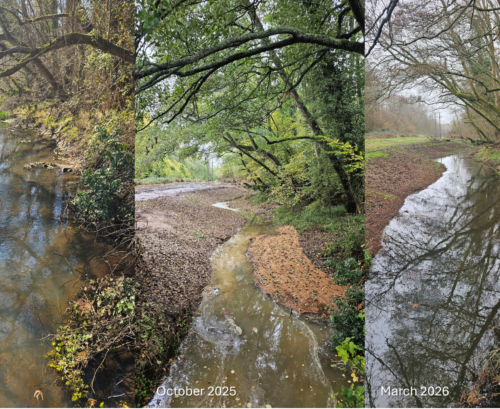
Watching the Sulham Brook Find Its Rhythm Again
Watching the Sulham Brook Find Its Rhythm Again Towards the end of last year, we shared an update on the works taking place at Sulham…
Newsletter
Keep in touch.
The natural choice for latest industry comment, news, insight and discussion
Thank you for booking.
To stay in touch, please sign up to our newsletter.
Return to five-rivers.com