

Fish Passage Creation
FiveRivers can act as both a designer and contractor for your fish passage creation project
Fish passages provide a means for fish species to fully utilise available habitat and complete their life cycles. We’re proud to provide full fish passage creation service, including design, installation and monitoring.
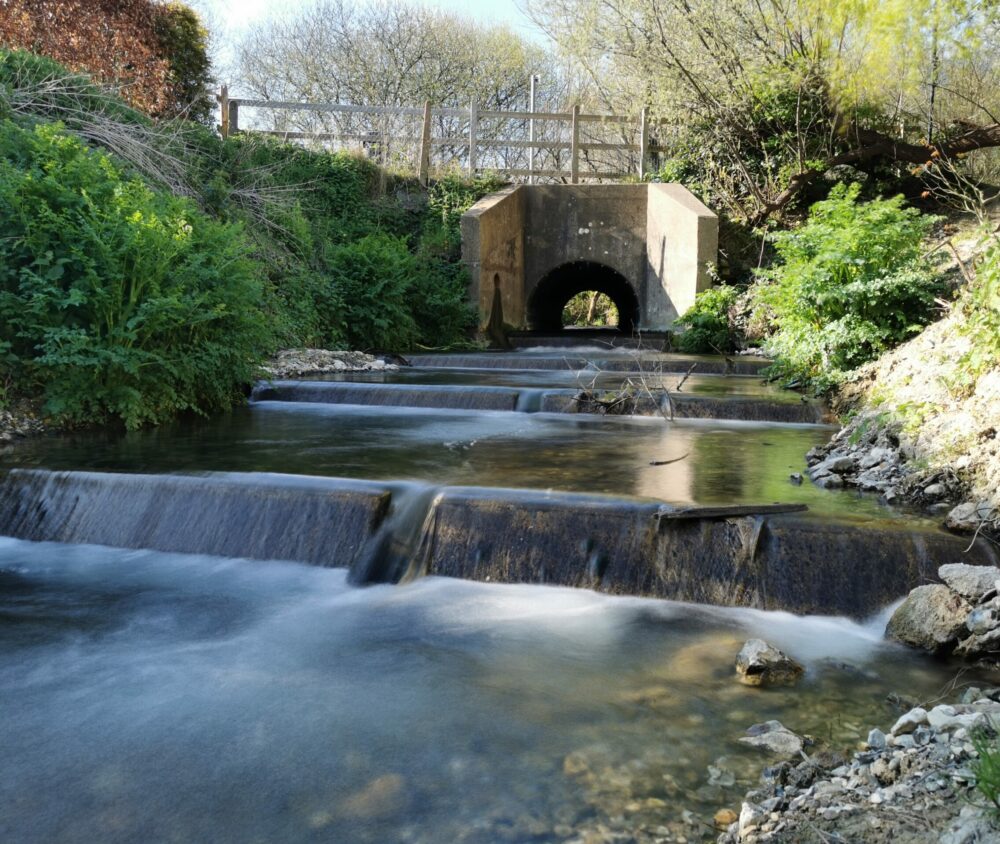
Our fish passage creation service involves building structures or modifying existing ones to allow fish to bypass barriers like weirs and dams, enabling them to reach spawning grounds and other vital habitats. Where possible, we will aim to remove existing barriers completely. However, there are options available when this is not possible, such as naturalised fish bypass channels; technical fish passes (e.g. Larinier); and non-technical fish passes, such as rock ramps, pre-barrages and low-cost recycled baffles.
We work in line with the Environment Agency’s Fish Pass Manual to ensure that the most appropriate and cost-effective fish passage solutions are used at each point, providing passage for multiple fish species where possible.
FiveRivers can act as both a designer and contractor for your fish passage creation project. From initial site assessments and feasibility studies through to detailed design, construction and monitoring, our team can manage the complete fish passage creation process. We combine ecological understanding with practical construction expertise to deliver solutions tailored to the characteristics of each watercourse, the species present and the requirements of the project. Our approach prioritises nature-based solutions wherever practicable, helping to restore more natural river processes while delivering effective, long-term improvements to fish migration.
We are also perfectly positioned to liaise with regulatory bodies in order to obtain fish passage approval and environmental water transfer permits.
The Problems
Barriers in Rivers
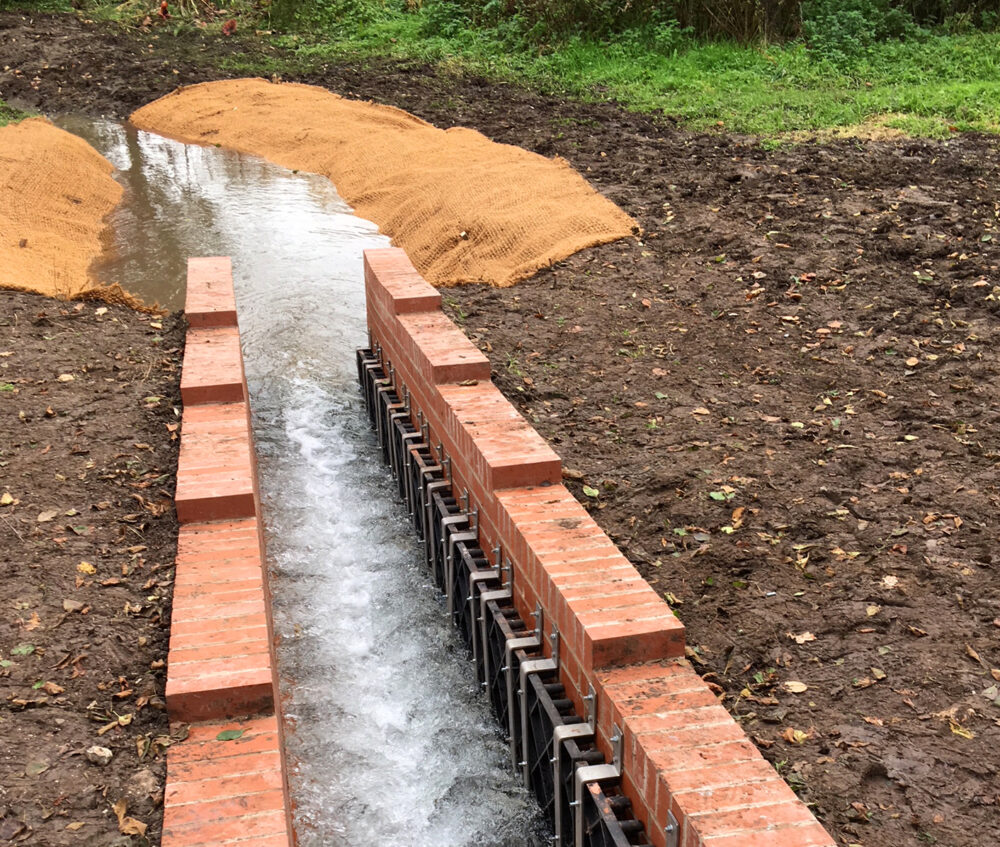
Rivers are interconnected ecosystems, and fish need to move freely through them to access the habitats required at different stages of their life cycles. However, structures such as weirs, dams, culverts and sluices can interrupt these natural movements, restricting access to suitable spawning areas, feeding grounds and sheltered habitats. Improving fish passage helps reconnect fragmented river habitats, supports fish populations and contributes to wider river restoration objectives.
It is critical to understand fish biology and behavior to design appropriate fish passage structures and identify operations that help increase fish survival. Some fish species are born in freshwater (rivers and lakes), spend most of their lives out at sea, before returning to freshwater to spawn (Anadromous/Diadromous), while others have the opposite lifecycle (Catadromous). Barriers in rivers and waterways can drastically impact these two species, preventing access to habitat that allows them to complete vital life stages.
While certain species, such as salmonids, are able to jump smaller barrier, coarse fish species, Eels and smaller salmonids are not be able to travel in the same way and may be restricted in their ability to reach their spawning habitat.
Fish passage is key to improving Water Framework Directive status. Under specific legislation, such as the Eels (England and Wales) Regulations 2009, there is also a requirement to improve passage for this single species.
FiveRivers provides professional fish passage design and installation services to improve river connectivity and restore access to vital aquatic habitats. Working with rivers, streams and other watercourses across the UK, we develop practical fish passage solutions that help fish bypass barriers like weirs and dams, enabling them to reach spawning grounds and other vital habitats.
The Solutions
Nature-based Solutions
Every watercourse presents different challenges, so successful fish passage design requires a solution that reflects local river conditions, the barrier being addressed and the needs of the fish species concerned. There are many different techniques to improve fish passage, depending on the specific site conditions, constraints and species of fish present; each project will be different.
FiveRivers offers a range of fish passage solutions, using the most appropriate approach for each project. By bringing design and construction expertise together, we help clients identify practical, cost-effective solutions while managing the challenges associated with working in sensitive river environments.
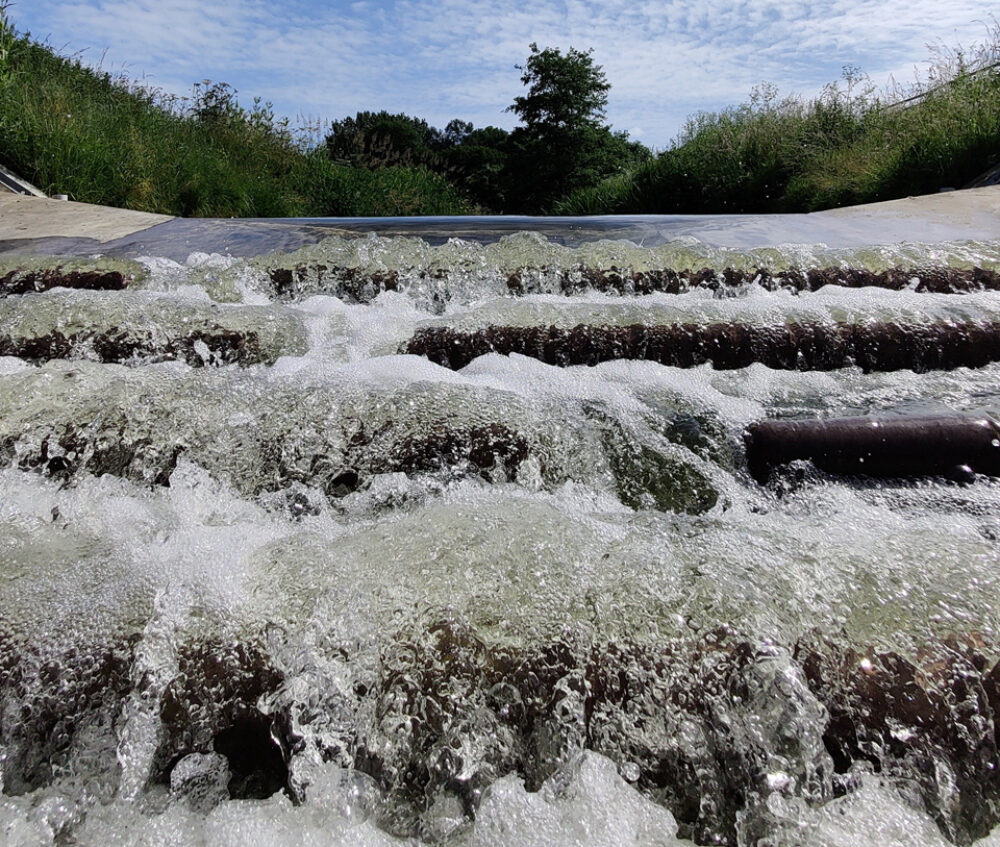
Our preference is full removal of the barrier, but this is not always possible or desirable. We have a toolkit of available options that we can use to deliver fish passage based on the specific site constraints and conditions. Where removal is not an option we favour a ‘nature-like’ fish pass solution, bypassing a structure with a naturalised channel or creation of a ramp (e.g. low cost baffles or a rock ramp) to allow fish to traverse an obstacle. When we so need a more engineered solution we will develop a pool or baffle-type design built on the structure within the constrained channel.
We have acted as principle contractor, delivering fish passage projects, on a variety of schemes from small easements (£20K) to large scale naturalised passes with complex offtake structures (£1Mil). Improving fish passage can deliver benefits much greater than the removal of a single barrier. Reconnecting river habitats helps restore the movement of fish and supports the wider ecological function of freshwater systems.
FiveRivers are experts in fish passage creation and can be involved into your fish passage creation project as both a designer and contractor. If you have specific questions, or want to discuss a project, our professional and friendly team are available to answer any question, so don’t hesitate contacting us!

Contact us
Talk to an expert in Fish Passage Creation
Sam Whittall
Operations manager
Get in touch by either phone or email to speak with Sam and discuss your needs. Alternatively click the button below to complete our contact form.
Telephone: 01722 783 041
Email: sales@five-rivers.com
Thank you for booking.
To stay in touch, please sign up to our newsletter.
Return to five-rivers.com