

Peatland Restoration
FiveRivers is the leading peatland restoration company in the UK
As one of the UK’s leading specialists in the consultation, design and implementation of environmental solutions, we at FiveRivers understand that the restoration of peatland is key to maintaining the health of our planet. Carbon sequestration, flood management and amenity value. We’re here to advise and implement on peatland restoration.
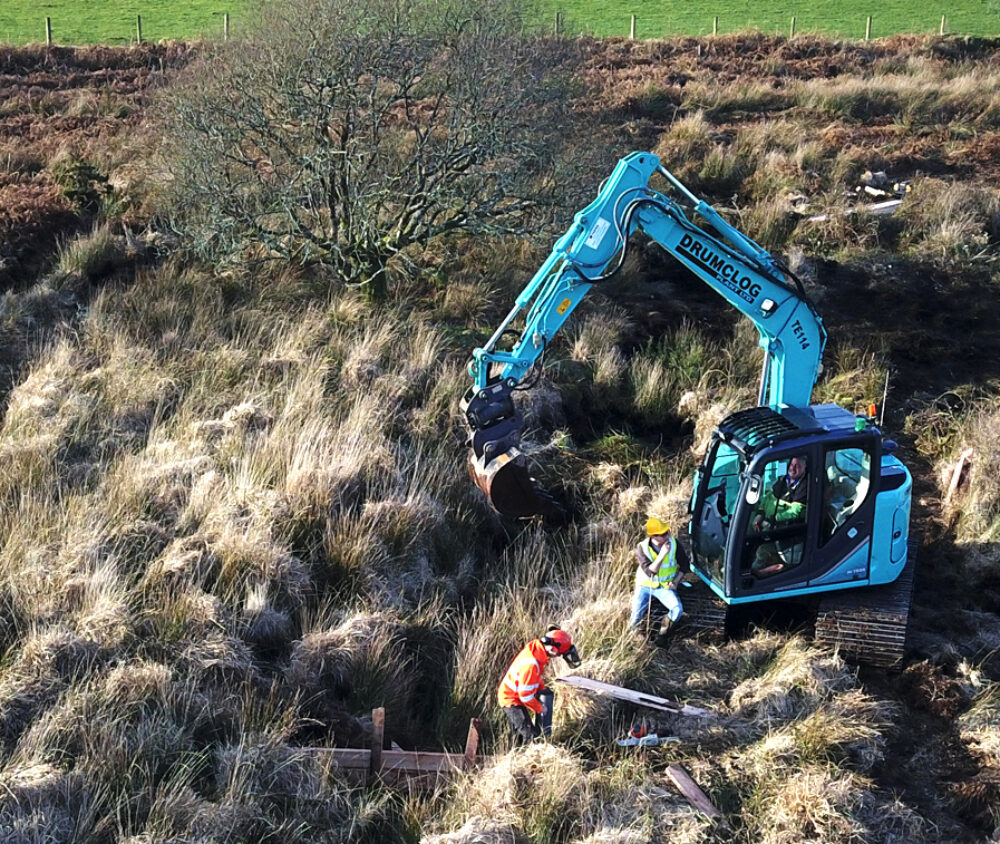
FiveRivers is the leading peatland restoration company in the UK, with own fleet of low ground pressure (LGP) excavators and vast experience of working in remote environments.
Peatlands, also known as blanket bogs, raised mires and valley mires, are unique and valuable ecosystems that play a vital role in our planet’s health. These wetland habitats, characterised by the accumulation of partially decayed plant material known as peat, occupy around 12% of the UK’s land area.
Peatland areas provide food and shelter for a wide range of wildlife species and also play an instrumental role in flood management, acting like a giant sponge to absorb moisture. Most critically, peatlands can help us to slow climate change via carbon sequestration. However, negative human intervention (such as the draining of peatlands for crops, burning for grouse habitat or peat extraction for energy purposes) has put these most crucial of ecosystems at great risk.
The process of peatland restoration involves covering damaged or bare areas with vegetation in order to recreate boggy, waterlogged conditions upon which special plant species (such as Sphagnum moss) can thrive.
FiveRivers is the leading peatland restoration contractor having successfully completed peatland restoration contracts across the UK.
The Problems
Peatlands are Damaged
The preservation of peatland is of growing concern amongst environmentalists. Peatlands are found in 180 countries worldwide, but cover less than 3% of global land surface. Despite this, they hold huge amounts of carbon – more than twice as much as the world’s forests. As peatlands are damaged (or even eradicated), carbon dioxide levels may increase, contributing to climate change. Additionally, areas which suffer a loss of wet peatland can dry and crack, resulting in erosion. Degraded peatlands can also increase the risk of flooding for downstream communities.
Around 80% of UK peatlands are damaged, drained, or degraded, turning them from crucial carbon sinks into significant sources of carbon dioxide emissions. Decades of agricultural drainage, forestry, mining, and burning have dried out these ecosystems.
Fortunately, peatland restoration is a feasible, affordable way to halt habitat loss and it has a wealth of other environmental benefits, including carbon sequestration.
The Solutions
Flexible Interventions
Peatland restoration is the process of reversing damage to peat bogs by raising water levels, blocking drainage ditches and encouraging special plant species (such as Sphagnum moss) to regrow. It aims to turn degraded, carbon-emitting sites into healthy, active, carbon-storing wetlands. This restores biodiversity, improves water quality and reduces flood risks.
FiveRivers are proud to be an industry leader in peatland restoration services, and it is a nature-based solution that we’re particularly passionate about.
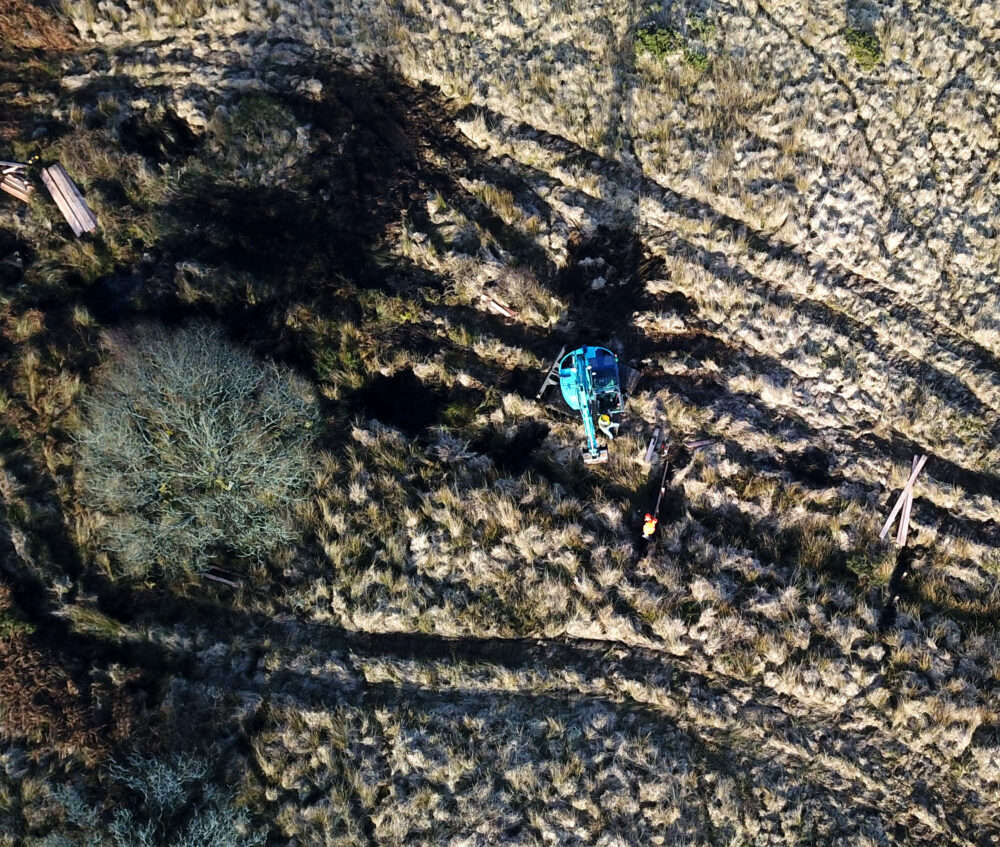
We provide feasibility and design services utilising our LiDAR drone capability, enabling us to map large areas of peatland quickly and safely, and producing intervention plans than can be used for project costing.
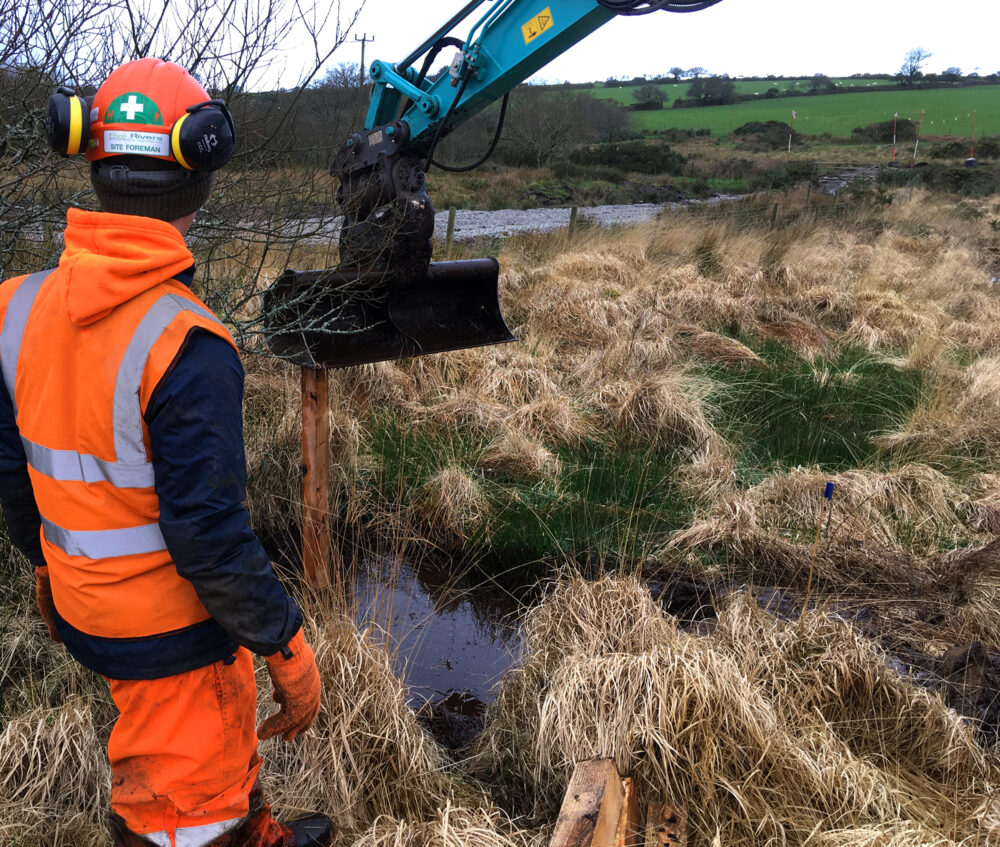
Sustainable restoration solutions include using cedar posts and boards, backfilled with site-won soil, to reduce the flow of water. We also utilise hazel faggots banded with twine to capture sediment, hold the water back and encourage peat restoration.
As the leading peatland restoration specialist, we have invested in specialist plant and machinery which enables our team to deliver on restoration projects. Restoration work is carried out using our own low ground pressure excavators, fitted with engcon tilt rotators to reduce track movements, and utilising biodegradable hydraulic oil as standard. Works typically consist of blocking ditches and gullies with a combination of peat blocks and cedar dam installations. Flexibility on site is key, as interventions vary from site to site.

Contact us
Talk to an expert in Peatland Restoration
Sam Whittall
Operations Manager
Get in touch by either phone or email to speak with Sam and discuss your needs. Alternatively click the button below to complete our contact form.
Telephone: 01722 783 041
Email: sales@five-rivers.com
Thank you for booking.
To stay in touch, please sign up to our newsletter.
Return to five-rivers.com